Why Shaft Flex Isn't Always Everything
Flex letters aren't standardized across brands. Here's what CPM actually measures, why "Stiff" isn't the same everywhere, and what my own bag says about it.
You switch driver shafts, stay in the same "Stiff" you've always played, and the club feels like a different piece of equipment. Nothing about your swing changed. The letter didn't lie to you, not exactly. It just never meant what you assumed it meant, because there is no rule anywhere that makes one company's Stiff match another's. I also want to note that this is a relatively high-level topic. So if CPM happens to be something that's a little bit too broad, that's okay. We'll be getting a little bit more basic as the article goes on.
Gonna throw some cold water onto this debate. No, golf shaft flex is not standardized across brands. Flex letters, Ladies, Senior, Regular, Stiff, Extra Stiff, are each manufacturer's own internal label, not a regulated industry spec, and nothing requires one company's Stiff to match another's. Hell, if you look at brands like Tour AD, there's even a Stiff Regular in the mix somewhere. The real physical measurement underneath the letter is CPM, cycles per minute, and CPM is the number that actually behaves consistently from shaft to shaft. The letter is shorthand for a range of CPM values, and different companies draw and publish those ranges differently.
What a Flex Chart Actually Tells You
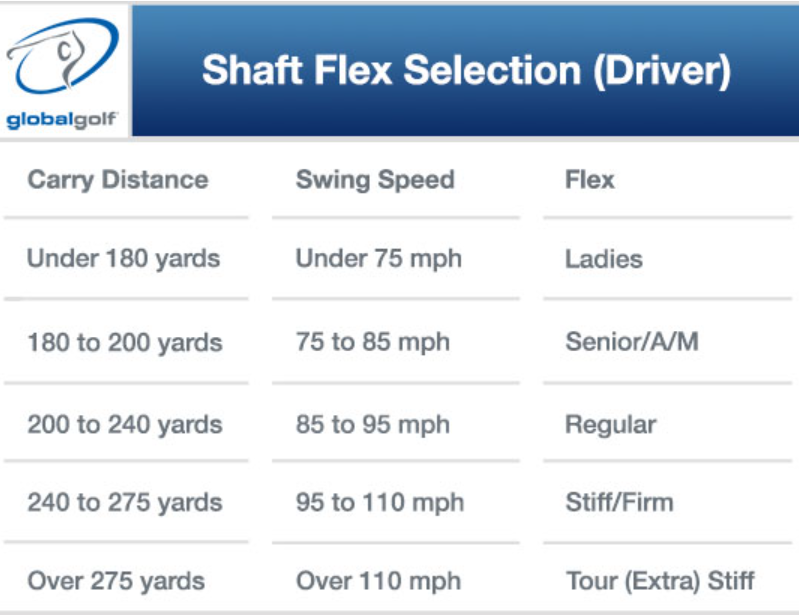
A swing-speed-to-flex chart gets you a starting band, not a diagnosis. Depending on which chart you're looking at, Regular usually sits somewhere around 75 to 95 mph and Stiff somewhere around 85 to 105 mph. Notice the overlap. That's not a typo. Flex categories are wide on purpose, often 15 to 20 mph per band, because shaft manufacturing sorts into a handful of buckets and your actual swing speed isn't a bucket. It's a continuous number that gets forced into one anyway. But something I want to note as well is that swing speed per iron and swing speed for driver are going to be two completely separate sets of criteria.
So when a chart hands you a letter, it already did less work than it looks like. It told you which neighborhood to start in.
Part of why those bands don't line up brand to brand comes down to what's actually different inside the shaft: wall thickness, the materials used, where along the shaft it's reinforced. Two companies can build a shaft to hit roughly the same CPM number and still produce a different feel, because CPM measures how much the shaft bends, not exactly where or how it bends along its length. There's going to be a difference in what a graphite Mitsubishi Tensei's "Stiff" is versus a Fujikura Ventus's "Stiff" or a steel Project X iron shaft versus a KBS.
Why "Stiff" Doesn't Mean the Same Thing Twice
CPM gets measured by clamping the grip end of a shaft, pulling the tip down, letting it go, and counting how many times it oscillates in a minute. Golf shafts generally run somewhere between 200 CPM, genuinely flexible, and 300-plus CPM, very stiff. A Regular typically lands in the low 240s to 260s. A Stiff typically lands in the 260s to 280s. Those ranges alone tell you flex is a spectrum getting sliced into labels, not a fixed point.
Here's where it actually breaks down. Tim Briand, a fitter with True Spec Golf, has pointed to two shafts in the same family, both labeled X-flex, that measure roughly 33 CPM apart: a Modus 120X running around 303 CPM and a Modus 130X running around 336. Same brand. Same letter on the label. That gap is wide enough to cover the difference between a Regular and a Stiff in some other manufacturer's entire lineup. If that's true inside one company's own X-flex shafts, treating "Stiff" as a portable, comparable spec across different brands was never going to hold up.
Kris McCormack, VP of Tour and Education at the same company, has put it even more bluntly, calling flex letters essentially irrelevant as standalone indicators: "One company's Stiff could be another company's X could be another company's red." Some brands skip letters entirely and label flex by color instead, which is its own reminder that the letter system was never a standard, just the convention most of the industry happened to settle on. Two different fitters, two separate examples, pointing at the same thing. The letter on the shelf tells you almost nothing by itself.
Torque Isn't Standardized Either
It's not only flex. Torque, a shaft's resistance to twisting through impact, has the identical problem. Every manufacturer measures it with a slightly different clamp size, a different distance from the clamp to where force gets applied and a different amount of force. A shaft rated 4.0 degrees of torque from one company isn't reliably a 4.0 from another. This isn't a weird exception buried in one spec sheet. It's a pattern in how the whole industry reports shaft numbers, which is the second reason a spec sheet from a brand switch can look identical on paper and feel nothing alike in your hands.
What This Means When You Switch Brands
Staying in the same letter across a brand switch is not a guarantee of staying in the same feel. If you can get the actual CPM number on both shafts, old and new, that's the real comparison, not the flex label printed on the side. If you can't get that number, which is common outside a fitting bay, that's your signal you need an actual fitting conversation instead of a chart lookup or a guess based on what worked last time.
Practically, that means walking into a fitting or a shaft comparison with three questions instead of one: what's the actual CPM, what's the torque rating, and where does the shaft kick, meaning where along its length it actually flexes. A flex letter alone answers none of those. All three together get you much closer to knowing whether a new shaft will genuinely feel like your old one, instead of just claiming to on the label.
The Shaft Is a Timing Mechanism
Here's the part most flex content skips entirely. Flex, weight and kick point work together as a system tuned to how you personally load and release a shaft on the way down, not just how fast you swing it. A golfer who times their release well can get more speed out of a lighter, whippier shaft than a heavier shaft that supposedly "matches" their speed would ever let them generate. That's part of why elite long drivers often compete with senior flex or even ladies flex driver shafts. They aren't slow swingers. They're golfers who load and release a shaft so efficiently that a lighter, whippier build converts into more clubhead speed than raw stiffness would.
Their everyday, on-course drivers usually run heavier and stiffer than the shaft they compete with, though. The ultra-light build is made to win with one all-out swing, but there's a lot to learn from those long drivers. A prime example of this is Martin Borgmeier. Martin Borgmeier has been using TPT driver shafts for years now and one of the things that he always talked about was CPM. A lot of these long drivers out here have those lightweight shafts because they know how to control their driver swing and they want it tuned to the CPM that they're swinging with, which is insane. The fact that someone can be that in tune with their equipment is damn near otherworldly in my opinion. But for us mere mortals, we can dial it back a bit.
I can make this concrete with my own bag, which is the reason why I even wrote this to begin with.
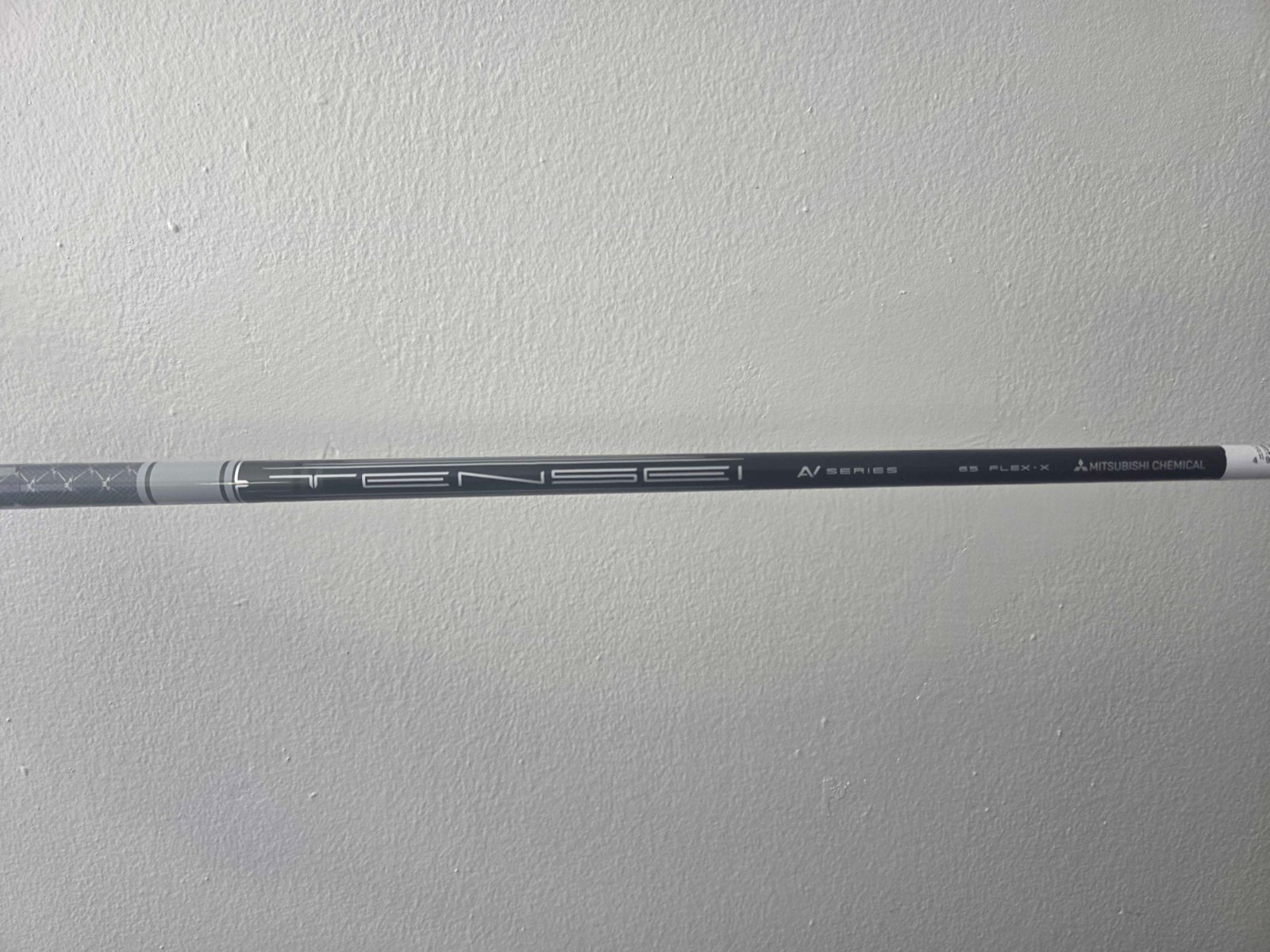
My driver is a Srixon ZX5 LS Mk II, dialed down to 7.5 degrees off a 8.5 degree head, with a Mitsubishi Tensei White AV in X-Stiff, about 65 grams, a low-spin, low-torque build. My clubhead speed sits right around 120 mph. PGA Tour average is 115. I'm meaningfully above that number, and that's exactly the profile that wants a heavier, stiffer, lower-spin shaft.
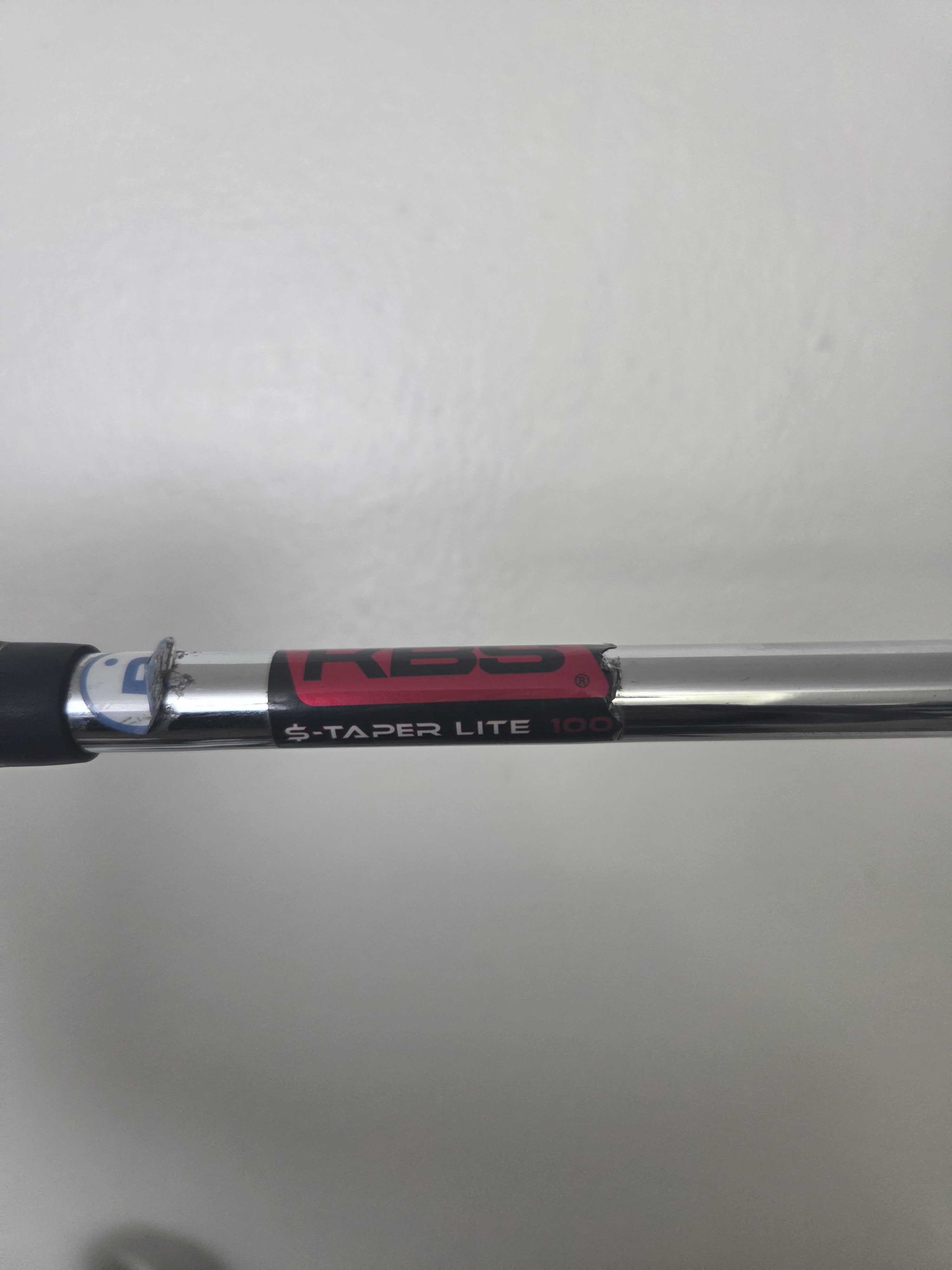
My irons are a Honma TR20 P, a player's distance set with a KBS $-Taper Lite in Stiff, only 100 grams, a full flex grade down from my driver shaft and noticeably lighter. I don't need to force iron speed the way my driver number suggests, and I get pretty steep at the bottom of my swing, which is part of why I can time a stiffer, lower-spin build well without it fighting me.
My wedges go the other direction again. Two TaylorMade MG wedges with True Temper Dynamic Gold S200 shafts, right around 127 grams, heavier than my irons on purpose. I don't take full swings with wedges, just a personal rule. I feel like I can time where the head is in my swing with heavier wedge shafts, but this isn't a one-size-fits-all rule.
Same golfer, three clubs, three different weight and flex answers, because each club is asking my swing to do something different. That's an argument a chart alone can't make for you.
What Your Ball Flight Is Already Telling You
Swing speed still matters. It's just not the whole conversation. If you're swinging your irons around 80 mph, I'm probably starting you in Regular. If you're swinging your driver somewhere around 90 to 95 mph, you're sitting right on the real cusp between Regular and Stiff, and that's not the chart failing you. It's a genuine toss-up that comes down to tempo and feel, not a number that resolves itself.
Your ball flight is already giving you a diagnostic most golfers never connect to their shaft. If you notice the clubface opening at the bottom of your swing and your shots are consistently missing right, that's usually a torque signal, not a flex one. The fix is often a heavier or higher-torque-resistant shaft, not simply going stiffer. Conventional wisdom says match the number and move on. I'd encourage you to make that call for yourself, because you're the only one who has to live with how the club feels, on and off the course. You also have to think of loft and lie angle. Are you an upright, or a flat player? These details matter, and it's best you get fit.
What This Means for You
If you can time it, the letter on the shaft matters less than the whole system working together: weight, flex, kick point and torque, tuned to your actual swing instead of a printed label.
Start a free shaft fitting with Ace at truepathgolf.me/smart-shaft-fitting. Ace doesn't need a launch monitor sitting in your garage to do this. It asks about your numbers, your tempo and what your ball is actually doing, and builds a real answer around that instead of handing you a letter and calling it done.
Check out my other articles, like the reviews on Piss Missile and Snyder Golf balls.
Garry Callis Jr.
Founder/Editor
True Path Golf