You Don't Have The Same Pop With Your Driver: Why?
Losing distance off the tee? Before you buy new equipment, get a diagnosis. True Path Golf's AI, Ace tells you exactly what's wrong, no hardware needed.
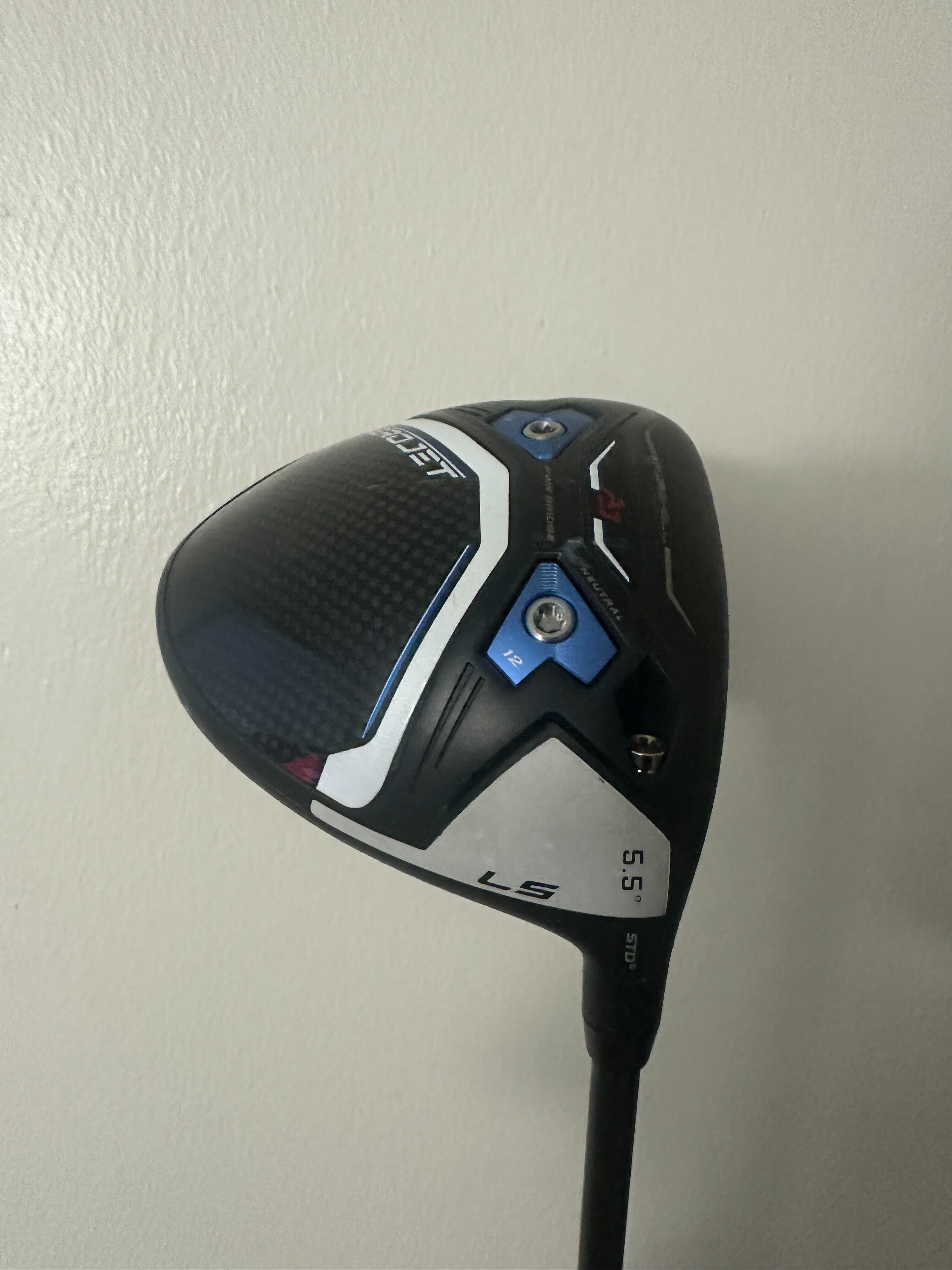
You used to hit it 275. Maybe 280 on a good day. Now it's 260, and you've spent two seasons blaming your swing.
So you did what equipment marketing teaches every golfer to do: watch what the pros play. Scottie and Rory are beating the holy hell out of balls off the tee, Bryson rebuilt his entire bag around single length clubs and is basically Doc freaking Brown on the golf course. You picked up the new driver, a sleeve of tour balls, (that you have no business buying) maybe swapped your shaft, and you're still coming up short.
Losing distance off the tee can trace to your swing, your equipment, or both. The problem is that most golfers skip the diagnosis and go straight to spending money, or straight to the range to grind on something that may not need grinding. Before you do either, you need to know what's actually wrong.
TL:DR
Distance loss in recreational golfers frequently traces to equipment mismatch, though swing mechanics can be a contributing factor
Tour equipment is engineered for swing speeds of 110–125 mph, most recreational male golfers swing between 85 and 100 mph
A shaft is a timing mechanism: wrong flex opens or closes the face before impact, producing distance loss and directional misses
A 90+ compression tour ball doesn't fully compress at 88–95 mph, costing ball speed and carry distance
Getting a diagnosis before spending money on equipment or lessons directs your time and money to the actual problem
How the Equipment Marketing Trap Works
The equipment industry runs on one reliable lever: aspiration. Pros hit it farther, pros win tournaments, pros use this equipment, so use this equipment and you'll hit it farther too.
Tour players swing their drivers at 110–125 mph. The average recreational male golfer swings between 85 and 100 mph. Equipment optimized for 120 mph performs very differently at 92 mph. The shaft stiffness, the ball compression, the spin characteristics, all of it calibrated for a swing speed most recreational players simply don't have.
Tour players use Extra Stiff shafts because their transition forces and clubhead speeds demand it. They play 90+ compression tour balls because their swing speed fully compresses and unlocks those balls' performance. At 90 mph, a high-compression tour ball is too firm to fully compress off the face. You get less ball speed, less carry, and none of the spin separation that makes those balls valuable at tour speeds. The marketing doesn't explain any of this. It shows you the equipment list and leaves you to draw your own conclusions.
I spent some time as a Golf Sales Lead at my local Dick's Sporting Goods in Richmond, VA, and so I had to learn to fit customers for equipment. I remember one customer who came in with a beautiful set of Mizuno MP-29 irons, old school muscleback blades, and he was telling me he was losing distance. I had him hit a few shots on the Foresight GC3 we had with a newer TaylorMade Stealth set and he picked up a few yards. He jumped for joy, until the sticker shock hit him in the face like a truck. So instead of ringing it up, I worked on his technique and got him hitting a few extra balls. After 15 minutes or so, he was hitting those Mizunos pure. He thanked me for saving him $1,500, and for looking at him as a person, not a spreadsheet figure. That conversation stuck with me. The same situation plays out with drivers every week in every shop. You can't expect a $650 driver to fix a $2 swing.
I built True Path Golf because golfers deserve a diagnosis before they get a recommendation. And because the person giving the recommendation shouldn't profit from which way it goes. The AI logic is based from my personal experiences in club fitting, and things I've learned along the way.
The Shaft Is a Timing Mechanism
For most recreational golfers losing driver distance, the shaft is where the investigation should start.
A shaft is a timing mechanism. During your downswing, it loads, bending slightly in response to the forces your swing generates. At impact, it unloads, and that release determines how the face is positioned when it meets the ball.
When your swing speed changes, gradually with age, with injury, or even with swing improvements from lessons, a shaft that matched your old swing may no longer match your current one. A Stiff shaft calibrated for 105 mph starts behaving differently at 97 mph. It loads less completely, doesn't return to square as efficiently, and the face is slightly open at impact. The ball starts left and curves right. You lose distance, you lose accuracy, and you blame your swing.
The specifics depend on your transition, how aggressive or smooth your move from backswing to downswing is. An aggressive swing at 95 mph creates more shaft load than a smooth swing at the same speed. Two golfers with identical swing speeds can need different shafts for exactly this reason. The number alone doesn't tell the whole story.
What an Actual Diagnosis Sounds Like
Take a golfer swinging at 115 mph with a Regular flex shaft. The ball starts left and curves right. A fitting recommendation says "go stiffer." A diagnosis explains why: at 115 mph, a Regular flex shaft flexes so far open in transition that it can't recover before impact. The face opens. The ball launches left of target and curves away. The fix is a specific shaft with the right kick point for that swing speed and transition pattern.
Ace, True Path Golf's AI equipment doctor, runs that exact reasoning. It starts with diagnosis: your speed, your tempo, your miss pattern, your transition. Then it names the specific fix, not "try a mid-launch Stiff option," but "Fujikura Ventus TR Blue 7S, 75g Extra Stiff, Mid Launch, Low Spin, designed for aggressive swings at your speed window."
What You're Getting vs. What a Diagnosis Delivers
Most equipment purchases happen without a real diagnosis. Something that grinds my gears is when someone who doesn't care about your swing is fitting you. They hand you some random club, have you swing it a couple of times, tell you want you want to hear, and they make off like a bandit because they just ripped you off and provided no value to you. Just a set of clubs that don't fit you.
A diagnosis starts with questions before it gets to recommendations:
What is your driver swing speed, and has it changed recently?
What is your miss pattern, left, right, low, high, or inconsistent?
What is your tempo and transition, aggressive from the top, or smooth and late?
What does your ball flight look like under pressure or fatigue, when compensation breaks down?
Two golfers at 93 mph swing speed can need entirely different shafts depending on their answers. If you've never been asked these questions before receiving a recommendation, you went through a sales process.
Ace asks every one of them. If you have launch monitor data, from a TrackMan session, a FlightScope Mevo, or just a random picture you took when you wanted to brag to your homies, you can upload it and Ace interprets the dispersion, the bias, and the timing patterns, not just the averages.
Here's the thing: if Ace's diagnosis points to your swing rather than your equipment, that's the honest answer. Get with someone who knows the golf swing better than you do and learn from them. No equipment fix replaces good instruction when instruction is what's needed. We're building an ecosystem of players and coaches who can give you a hand.
Two Golfers, Two Different Problems
Here's a couple of scenarios. A 45-year-old with a 13 handicap has been losing distance for two seasons. He's hitting his driver 261 yards, down from 275 when he was a 10. His shots tend to start left and trail right, especially under pressure. He's certain he needs a new driver.
Ace's diagnosis: he's swinging at 101 mph after recent lessons cleaned up his transition, but his shaft is a Regular flex rated for 85–95 mph. The shaft loads hard and releases open. The fix is a Stiff shaft with a lower torque rating built for his improved transition speed. He doesn't need a new driver head. He needs the right shaft for the swing he has now.
A 16-year-old joining his high school golf team is playing his dad's hand-me-down irons: decade-old steel shafts weighted for a 45-year-old swinging at 90 mph with his irons. The kid swings at 72 mph. His ball flight is low and left with anything longer than an 8-iron and he can't figure out why his teammates are hitting past him with older equipment.
The fix isn't more practice. The fix is irons built for his swing speed and tempo, and that answer is free to get before spending a dollar on equipment.
Frequently Asked Questions
How do I know if my shaft flex is wrong?
The clearest sign is a consistent miss pattern that doesn't improve with swing changes. If your shots start offline or curve directionally with your longer clubs, particularly under pressure or fatigue, and instruction hasn't corrected it, shaft flex is worth investigating. A shaft too stiff for your swing speed produces a push-fade pattern (low and right). A shaft too soft produces a hook pattern (high and left).
Does ball compression actually affect distance?
Yes, measurably. Compression describes how much a ball deforms at impact. Full energy transfer requires full compression. At 88–95 mph driver speed, a 90+ compression tour ball doesn't compress completely, and you leave ball speed on the table. Moving to a mid-compression ball in the 70–80 range at that swing speed typically adds carry distance with no change to your swing.
How accurate is an AI golf fitting compared to an in-person session?
For golfers in the 85–105 mph range where most recreational players live, an AI diagnosis built on accurate swing inputs and a structured product catalog identifies the same root causes a skilled fitter would. The practical gap for most golfers is cost: Club Champion fittings run $150–$450. True Path Golf's Ace is free.
What shaft flex do I need for my swing speed?
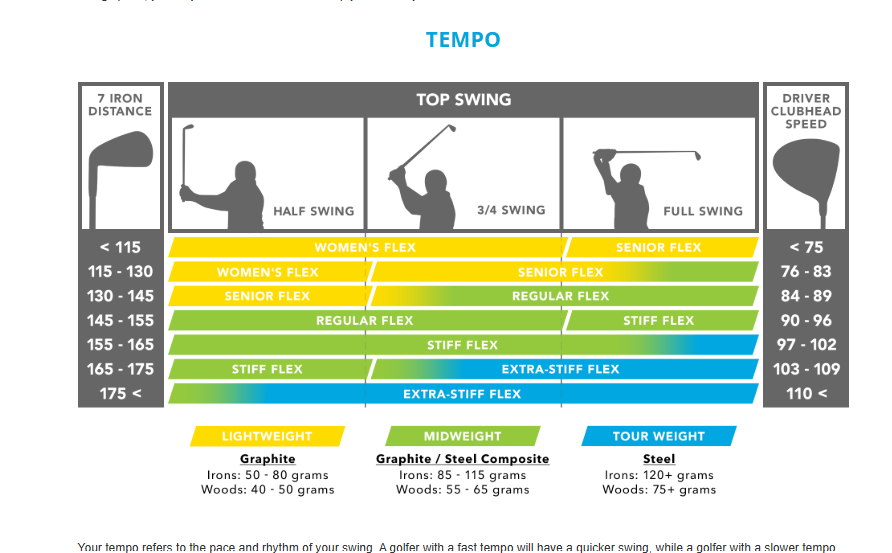
Shaft flex recommendations by driver speed, based on True Path Golf's fitting framework:
Below 60 mph → Ladies (L)
61–69 mph → Senior (A)
70–84 mph → Regular (R)
85–104 mph → Stiff (S)
105–115 mph → Extra Stiff (X)
115+ mph → Tour Stiff (TX)
These are starting points, not absolutes. Tempo shifts the answer: a slower, 3/4 swing at 90 mph may call for Regular; an aggressive full swing at the same speed calls for Stiff. Iron flex runs separately from driver flex your iron swing speed is lower than your driver speed, so fit them independently.
Can I get fit for a driver without a launch monitor?
Yes. A fitting based on swing speed, tempo, miss pattern, and ball flight identifies equipment mismatches accurately without launch monitor data. Ace is built specifically for golfers without monitor access. If you have data from a TrackMan session or similar, uploading it gives Ace additional context, but it's an enhancement, not a requirement.
Before you put another $500 toward equipment because a tour player uses it, spend 10 minutes with Ace. Tell it your swing speed, your tempo, your miss pattern. Upload your launch monitor data if you have it. Get a specific diagnosis, model names, engineering specs, and the reasoning behind each one, free, no hardware, no appointment.
I'm gonna keep it real with you, it might just be your clubs. But everyone swears up and down that it's them. You might not be the problem at all. Or well, a bigger part of the problem.
I'm looking for more folks to give Ace a test and see what you find. Always open for suggestions.